| Module Category | Description |
| Introduction & Basics | Concept of Zero Liquid Discharge, need for ZLD in water-scarce regions, role of ZLD in achieving complete wastewater reuse and regulatory compliance |
| Water/Wastewater Analysis | High-TDS wastewater characteristics, salt composition, scaling tendency, oil & grease, silica, chlorides, industrial effluent variability |
| Primary Treatment | Pre-treatment for ZLD feed: screening, oil & grease removal, solids separation, pH correction prior to RO/evaporation |
| Secondary Treatment | Integration with ETP biological treatment (aerobic/anaerobic) to reduce organic load before membrane systems |
| Tertiary Treatment | RO, UF, NF systems for maximum water recovery before thermal ZLD stage |
| Special Processes | Special Processes Evaporation and crystallisation are the final steps to eliminate liquid discharge and recover solid salts |
| Membrane Technology | Role of UF/RO in reducing load on evaporators, reject handling strategies, membrane recovery optimisation |
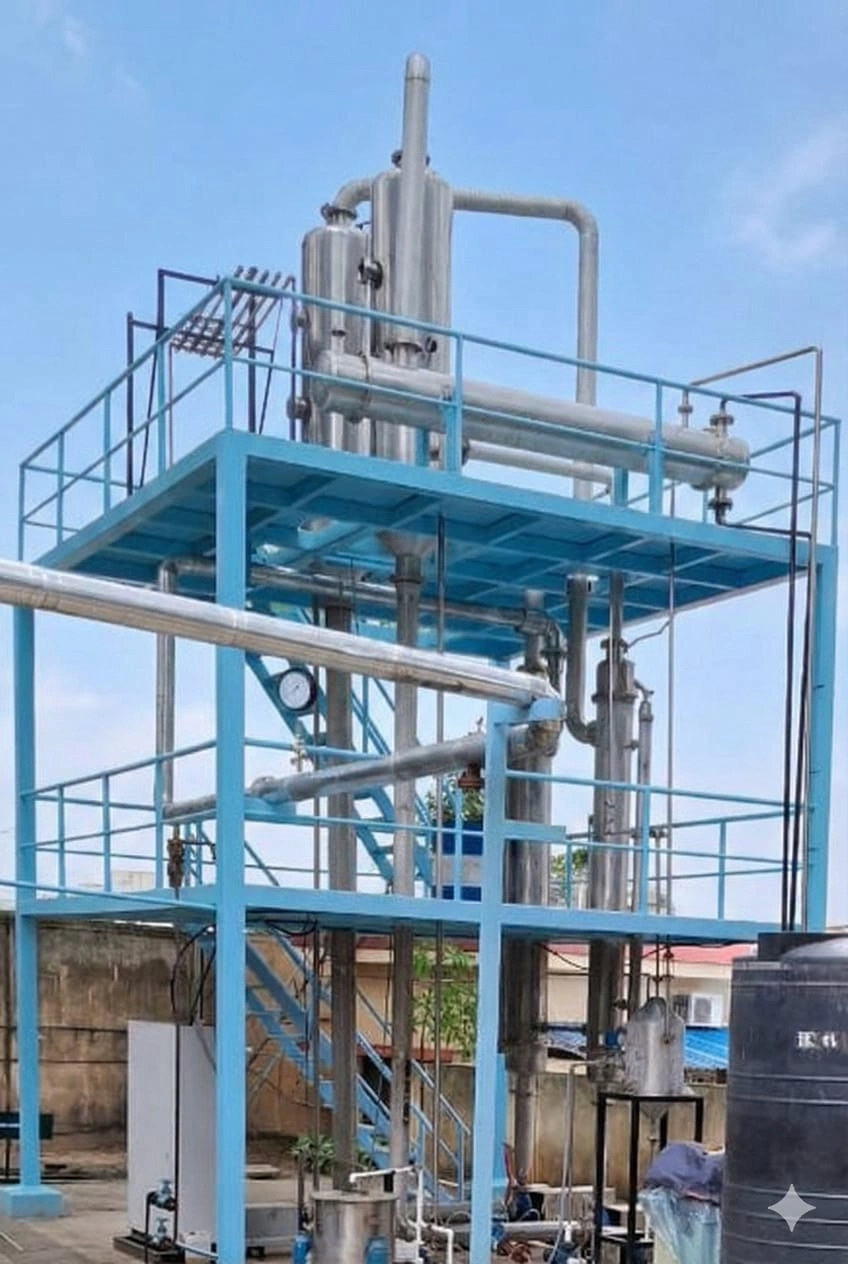
| System Design & Components | ZLD process flow diagrams, evaporator–crystallizer integration, effect selection (MEE, FCE, MVR), equipment sizing |
| Operation & Maintenance | Operation & Maintenance Feed quality monitoring, evaporator operation checkpoints, condensate quality control, CIP and descaling practices |
| Instrumentation | Flow meters, temperature & pressure sensors, pH/TDS monitoring, PLC/SCADA-based automation and alarms |
| Sludge Handling & Disposal | Concentrated brine handling, crystallised salt recovery, centrifuge/filter press use, safe solid waste disposal |
| Troubleshooting | Scaling and fouling issues, high energy consumption, condensate contamination, and crystallizer choking |
| Automation & Technology | PLC/SCADA control systems, MVR automation, interlocks, energy optimisation, and remote monitoring |
| Regulations & Compliance | ZLD regulatory framework, zero effluent discharge norms, audit readiness, compliance documentation and reporting |
For security purposes, please solve this simple puzzle to verify you are human before sending an OTP.
WhatsApp us